
Cherokee County Directory Holdings
The documented Cherokee County city directory shelf is small, but the local name trail is not. A 2005 Canton directory is verified, along with an undated title covering Canton, Ball Ground, Kille, Mullin, and Woodstock. No official catalog found in the research establishes a complete run, publisher sequence, or reverse-directory span. That gap matters. A lone citation should not be stretched into years that have not been checked. History Cherokee is the best first contact for the volumes themselves, while the Georgia Archives and digitized newspapers supply strong companion records.
| Collection | Years | Where Held | Access |
|---|---|---|---|
| Verified Canton city directory | 2005 | History Cherokee / cited local collection | Confirm by appointment |
| Canton directory including nearby towns | Undated | History Cherokee / NPS citation | Ask to inspect title page |
| Cherokee census microfilm | 1834; 1840-1880; 1900-1920 | Archives and historical bibliography | Verify reel or image access |
| Cherokee newspapers | 1833-1934 and 1939-1965 title runs | Georgia Historic Newspapers | Free online where digitized |
No open, verified Cherokee sample entry was located. Publisher names, publication frequency, missing years, and the presence of a street-order section remain unresolved. Ask for the title page, copyright page, abbreviation key, and front matter before recording a date. Those pages show what a volume actually covers and whether its address index is part of the same edition.
History Cherokee's Directory Desk
History Cherokee's research library is the strongest verified local archive. It reports more than 100,000 documents, photographs, oral histories, maps, artifacts, family histories, and objects tied to county people and businesses. Named holdings include the Canton Cotton Mills, William “Buddy” Alexander, Map, Photography, Historic Resource Survey, and Harold Johnston Archaeology collections. That scale makes it useful when a city directory gives only a terse line.
Research is by appointment at the Cherokee County History Center, 221 E. Marietta Street in Canton. The center is open Tuesday through Saturday, 10 a.m. to 5 p.m.; contact aberisford@historycherokee.org or 770-345-3288 ext. 1. Museum admission includes library access. Send the known name, rough date, town, and address before visiting, and ask whether staff can pull the verified volume or related photographs and maps.
The History Cherokee collection page shows the range of material available before an appointment.
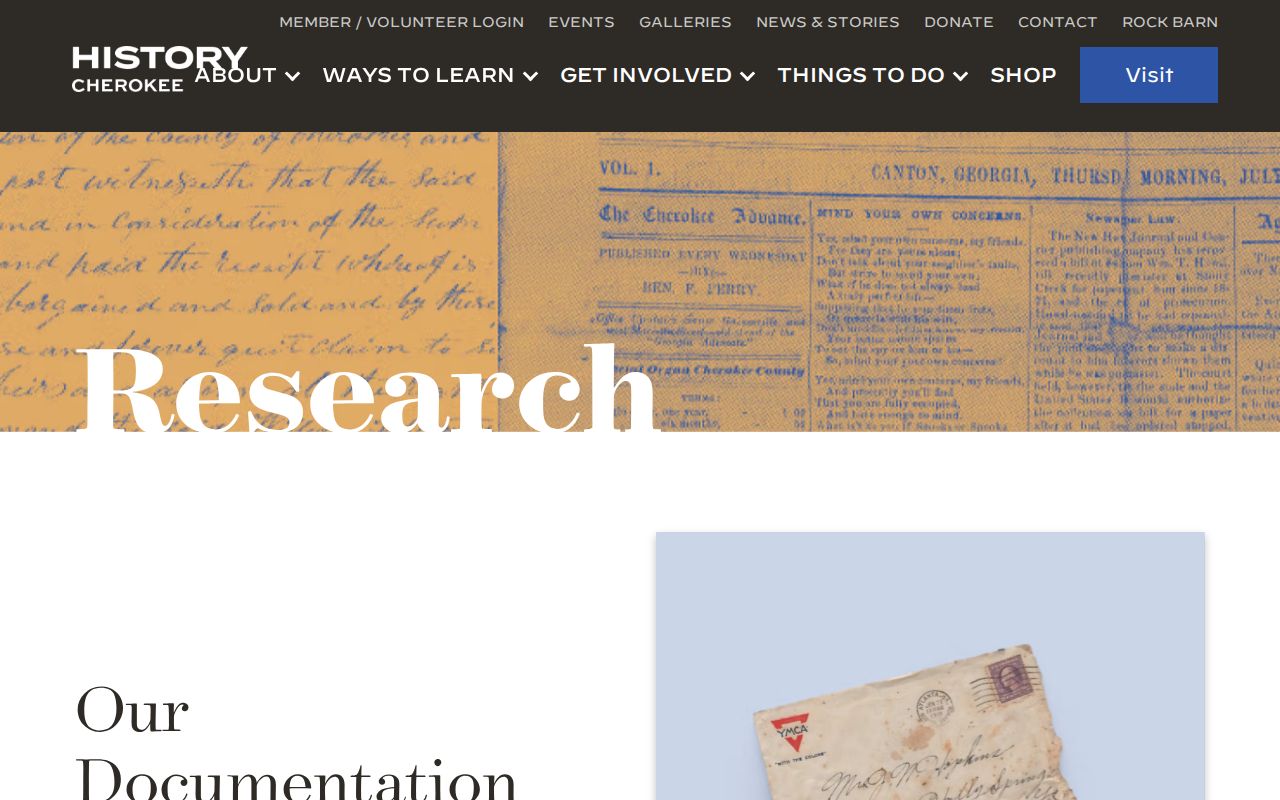
Its collection overview helps a researcher plan beyond a simple surname search and request the right local record group.
Cherokee County Library Access
R.T. Jones Memorial Library offers the practical library route when the historical center is not enough. The Sequoyah Regional Library local-history service connects users to genealogy resources and staff help. Its e-library advertises Ancestry Library Edition for use inside library locations, MyHeritage, GALILEO, newspaper access, and residential reference tools.
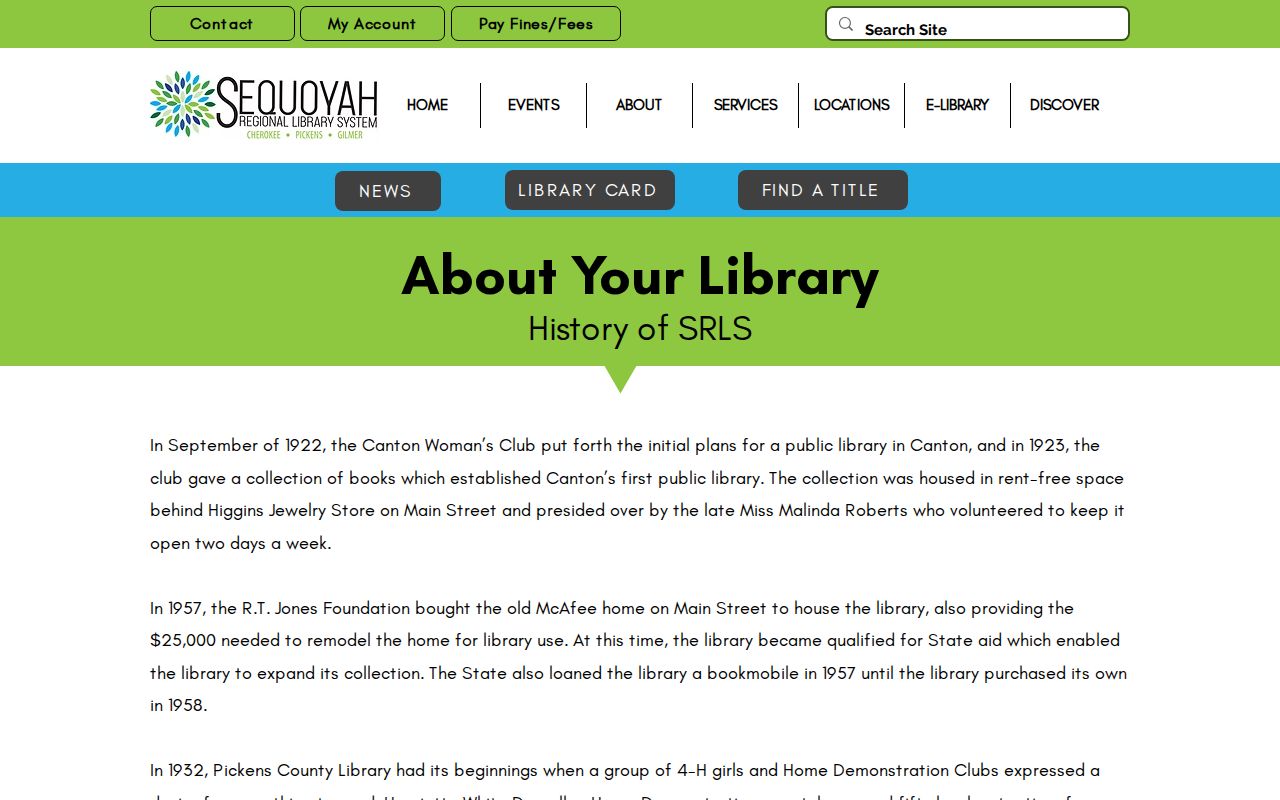
The library screen is a starting point, not proof of a shelf run. The site does not publish exact Cherokee city-directory years, reverse-directory years, obituary-index titles, or newspaper microfilm runs. Call 770-479-3090 and ask staff to check the catalog or shelf before traveling. Cards are free to residents, taxpayers, and property owners in Cherokee, Pickens, and Gilmer counties with current photo ID and address verification; nonresident cards cost $35 per year.
R.T. Jones is at 116 Brown Industrial Parkway in Canton. Hours are Monday and Wednesday 10 a.m. to 8 p.m.; Tuesday, Thursday, Friday, and Saturday 10 a.m. to 6 p.m.; and Sunday 2 to 6 p.m. On-site database rules can differ from remote access, so tell staff whether the search will be made in a branch or from home.
Reading Cherokee County Directory Entries
Until a local volume is inspected, use a cautious general reading method. An alphabetical entry may give an adult name, spouse, trade or employer, and residence. Some directories mark owners or renters, but no such mark has been verified for the Cherokee County titles. Copy the entry exactly, including punctuation and spelling. Then photograph or transcribe the volume's own key so a short letter is not assigned a meaning borrowed from a different publisher.
| Name | Usually an alphabetized adult or householder; preserve initials and spelling. |
|---|---|
| Spouse | May appear beside the listed person, but presence and format depend on the volume. |
| Work | An occupation or employer can separate people who share a name. |
| Residence | A house number and street may connect the entry to deeds, maps, or newspapers. |
| Marks | Owner, renter, widow, or boarding codes must be read from that edition's key. |
- Criss-cross directory
- A street-order section that lists addresses first, then the names connected with them. Its existence is not yet verified for the Cherokee titles.
- Householder index
- A list organized around the person responsible for a household, rather than every person at an address.
- Abbreviation key
- The publisher's legend for short forms and symbols. Copy it before interpreting any entry.
A directory entry is a dated clue, not a current resident statement. Compare the same person in another source and note the edition year on every citation.
Cherokee Directory Gaps in Newspapers
The Georgia Historic Newspapers Cherokee County collection bridges years for which no city directory is confirmed. The Cherokee Advance runs from 1880 to 1922 online. Other researched titles include the Georgian in 1875-1876, the Intelligencer in 1833-1834, and the North Georgia Tribune in 1939-1965. Search a surname with a town, business, church, or road name, then read legal notices, advertisements, obituaries, and social columns around each hit.
Newspapers can explain a move or disappearance between records. A store ad may place a proprietor in Canton; an obituary may connect relatives and a cemetery; a deed notice may provide land context. Optical character recognition often misses worn type, so browse by date and try initials or spelling variants. Do not assume a news mention proves residence on publication day.
Note: Newspaper evidence works best when paired with a dated deed, census line, probate file, or verified directory entry.
Cherokee Records Beyond Directory Years
The Georgia Archives research-help page explains how many early county deeds, estates, marriages, tax lists, and court books can be viewed through FamilySearch or County Records on Microfilm. Many are image browses, not global name searches. Open a volume's front index first, note the page or book reference, and then move to the cited image.
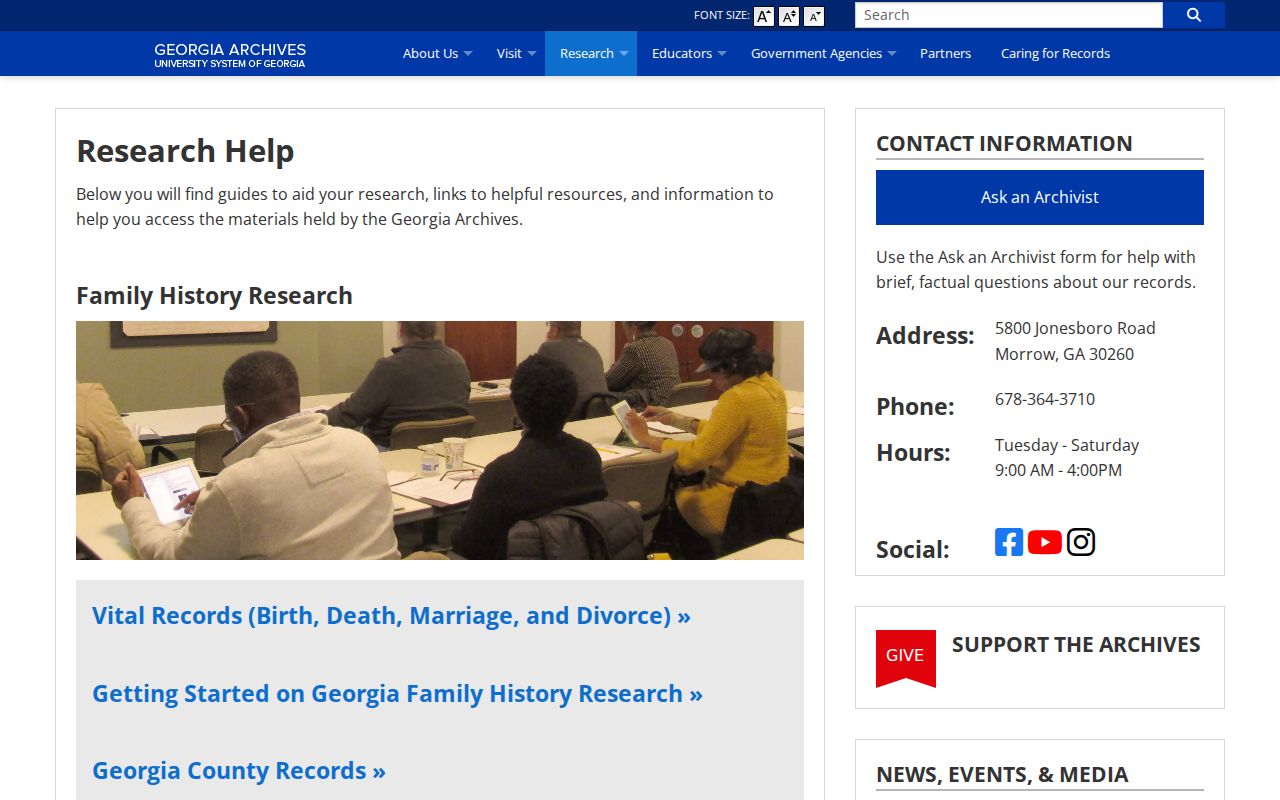
This access route fills long periods before modern directory publishing and helps test whether a name belonged to the same family.
The Georgia Archives Virtual Vault also provides digital collections and Cherokee's county card.
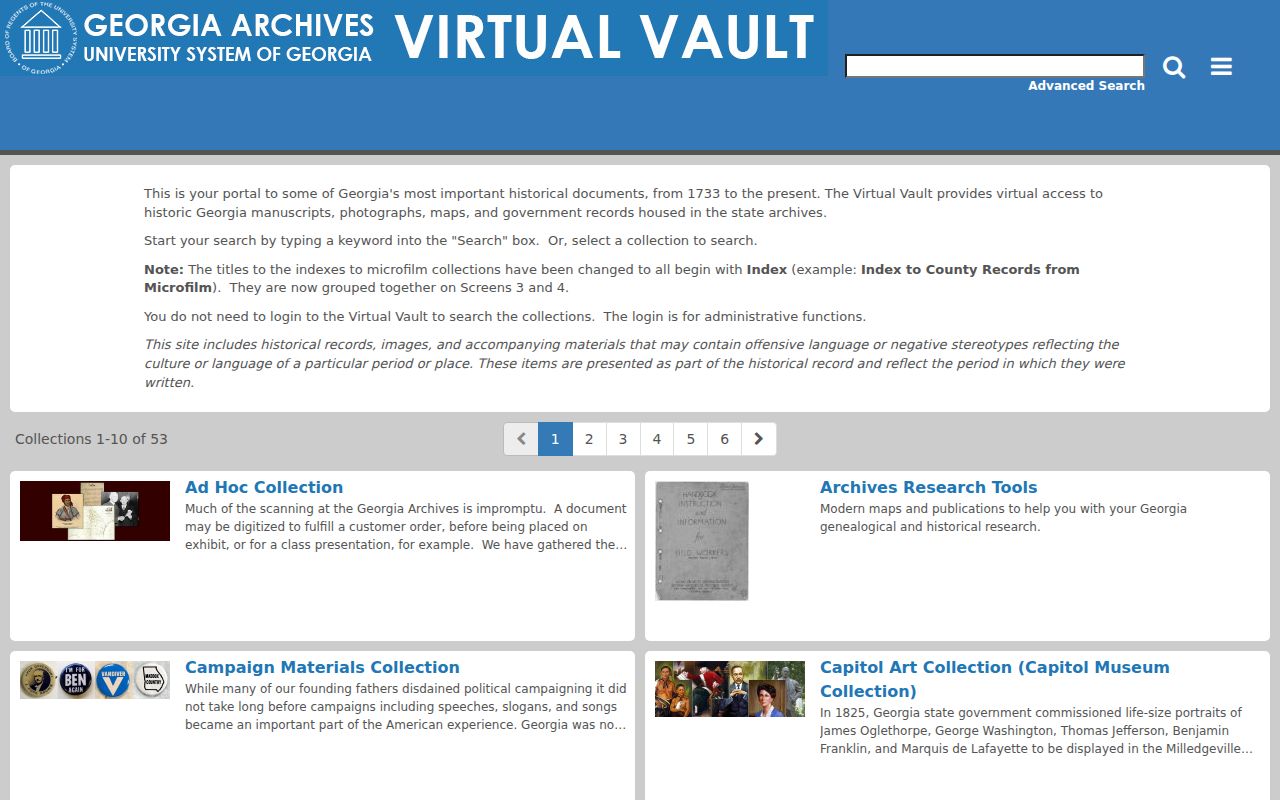
The county card points researchers toward available microfilm and record groups. It does not replace a catalog check for exact volume dates.
Cherokee County Records Survived
A local records story corrects a common mistake. The courthouse on Canton's square burned during Union action in 1865, but Superior Court clerk John B. Garrison had hidden records and papers at home. Courts met in the Presbyterian church for nine years. A replacement was finished in 1874, another courthouse burned in 1928, and the marble courthouse opened in 1929.
Do not label all pre-1865 Cherokee County records lost. Deed microfilm begins in 1833, while court minutes include volumes from the county's early years. The county itself was created on December 26, 1831, then divided by an 1832 act. These dates explain why early place references and record custody may not match modern county lines.
Cherokee Directory Search Around 1890
The 1890 federal population census is largely lost nationwide. That is not a Cherokee courthouse gap. For a household near that date, combine tax records, deeds, newspapers, probate, church or cemetery material, and any verified city directory entry. Earlier Cherokee census holdings include the 1834 state census and federal schedules from 1840 through 1880; later film resumes with 1900 through 1920.
This substitution method is stronger than treating a missing census as the end of the trail. A tax list can keep a landholder in place, a newspaper can date an event, and probate can explain a transfer between family members. Record both positive finds and years searched with no result.
Trace Cherokee County Directory Families
Build the family trail from the oldest firm match, not from a guessed directory run. A matching surname alone is weak evidence. An address, spouse, employer, land lot, or known relative makes the match more useful. Keep the 2005 Canton volume separate from the undated multi-town directory until its title page settles the date.
- Find the first dated entry and copy its full citation, spelling, address, and other printed fields.
- Check the next available volume, while recording the years for which no Cherokee County city directory is verified.
- Pair the address with a census, deed, map, or newspaper item from the same period.
- Use probate, an obituary, church material, or cemetery records to test kinship and explain an absence.
- Return to History Cherokee for the title page and abbreviation key before drawing a firm conclusion.
Disappearance can mean a move, death, a missed edition, a spelling change, or simple non-listing. It cannot be resolved from one blank year. Historical city directories and census evidence lead to family history, while modern address-keyed searching belongs in the Cherokee County street directory.